
What does this mean?
The focus is on understanding the connection of how we think and feel related to our social environments, with the goal of enhancing well-being during challenging circumstances related to animal care. This is done through a compassionate non-diagnostic approach, with emphasis on emotional support.
Services includes supporting pet owners during times of stress, grief, or end-of-life care; offering wellness support to veterinary staff; facilitating communication around euthanasia or illness; and holding compassionate space during emotionally complex experiences.
Services are relational, trauma-informed, and grounded in principles of equity, accessibility, and emotional safety.
Through Compassionate Creatures, Brenn provides non-clinical emotional, psycho-social, and wellness support services to individuals and professionals involved in animal caregiving.
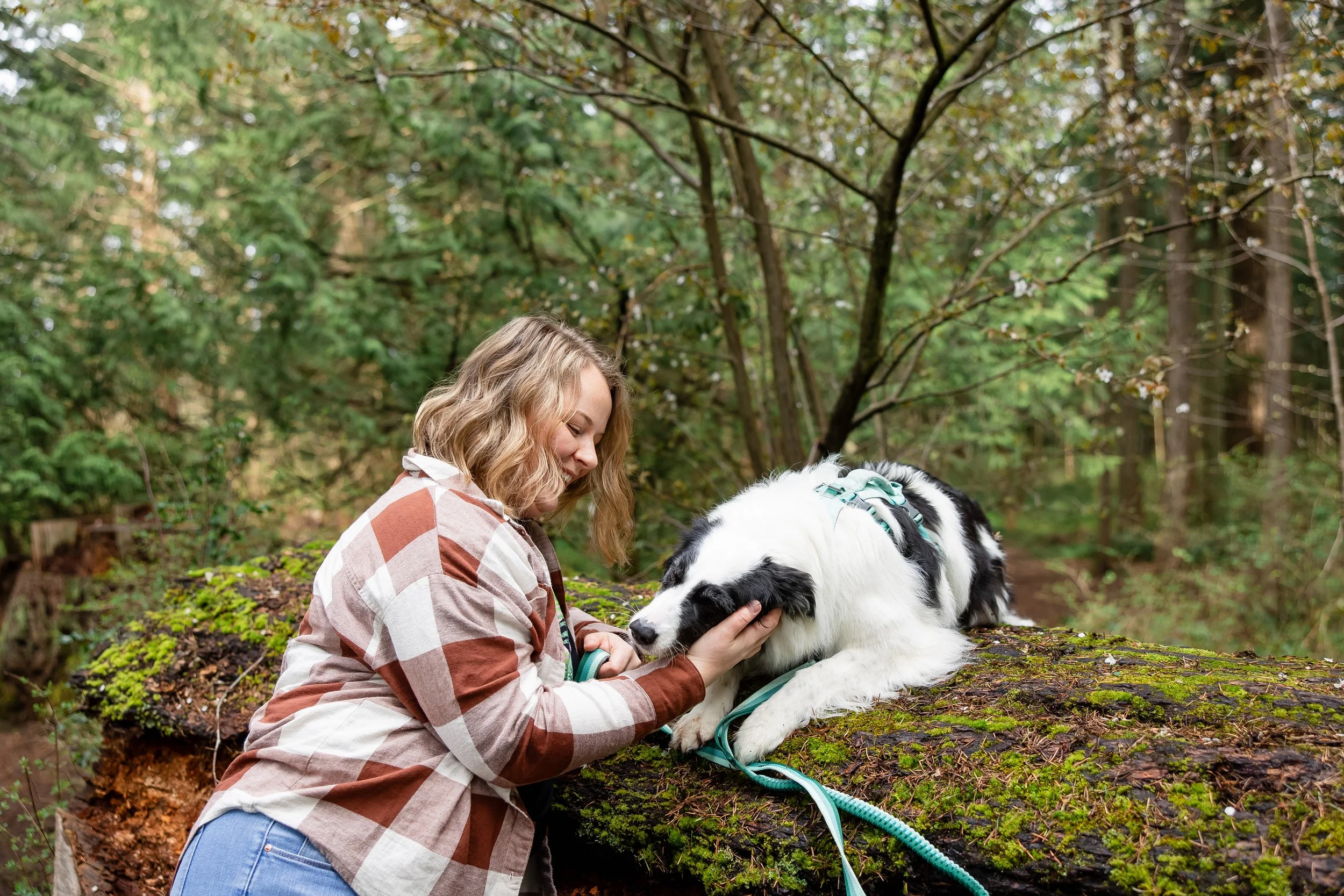
Pet loss, pet loss grief, pet loss bereavement, veterinary mental health
-
The name "Compassionate Creatures" was chosen intentionally to reflect my beliefs and understanding of reciprocal relationships. Through compassion, we hold concern for others, which is a vital component of collective care and relationships. Additionally, we are all creatures, interconnected through life and spaces. Think creatures supporting creatures, compassionately. This speaks to the human-animal bond and the reciprocity that brings mutual benefit to the bond.
-
After more than a decade working across animal care settings from research and clinical vet med practice to mental health advocacy, I’ve directly experienced how emotional strain impacts animal health and husbandry teams, including veterinary teams. Between grief, moral distress, and compassion fatigue, the animal care professional are overloaded by experiences and circumstances that often go unspoken and unsupported. I'm here to acknowledge this and help adjust this reality.
Additionally, I have personal lived experience with anticipatory grief and pet loss, as well as supporting animal guardians through decision-making processes and holding compassionate space on their worst days. It has been one of my most honoured roles as a veterinary staff team member, and continues to hold onto a place in my heart. The experience of companion animal loss is often simplified and minimized for many of us. -
Lived experience. Advanced and directed education. Professional skills.
As we get to know one another, I hope to be able to share some of my stories and the way my life has been shaped by animal companionship and loss.
I have studied animal health (BSc), One Health (MSc), and now Social Work (MSW - in progress), which have helped me to understand the links between animals, people, and the environment. To support interconnected life, we need multidisciplinary approaches. In the context of the human-animal bond and human-animal work, we can see that in so many ways our wellbeing and care is interlinked.
I also have years of experience in animal health and veterinary medicine, which have offered me essential insights and skills when working with pet guardians, as well as understand complex and nuanced experiences of animal care team members.
All of my experience has come together to inform my unique perspective and skill set, which are integrated with the uniquely “me” parts of myself. It is time to share this approach to care with the individuals, families, and teams who could benefit from support where support has been historically lacking.
-
I believe that both experiential and academic learning hold value in the process of growth, where neither is more important than the other. Academic learnings offer structured and theoretical/applied contexts, and community-based experiential learning is where nuance shows up and knowledge becomes action.
I will continue continue to grow my knowledge through trainings and certifications that expand the areas of my practice and engage with communities where I see gaps in support.
Continuation of the learning journey:Continued studies through the Master of Social Work program, including trauma-informed trainings.
Continued experience and engagement with communities that I share space and time with.
External trainings in emotional CPR, crisis intervention, debriefing strategies, grief guidance, and more.